East-West Shrimp Salad

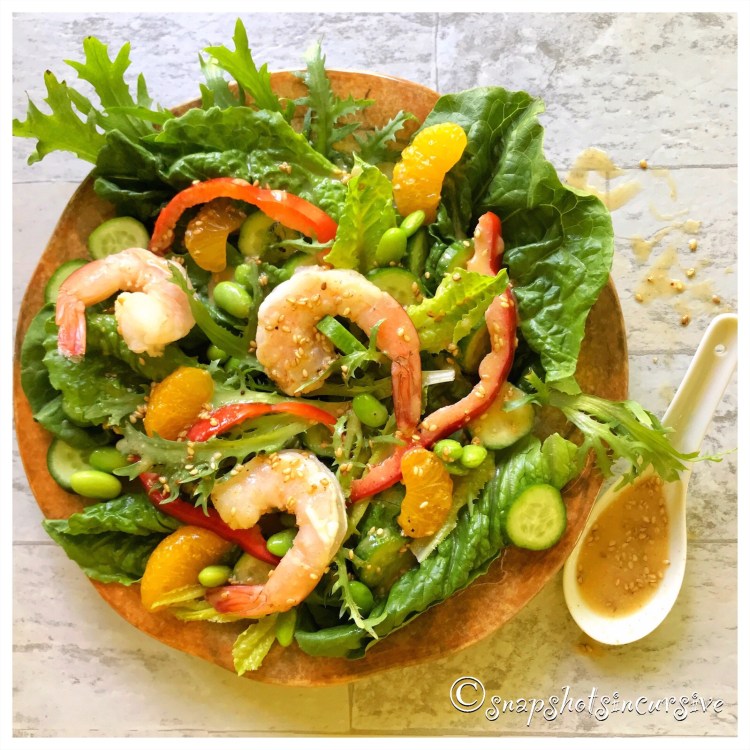
What’s Cooking in Gail’s Kitchen? Elevated Edibles: East-West Shrimp Salad! Shrimp, on its own, is a star attraction for a special meal. That pretty much goes without saying. I like the idea that shrimp makes a main course look complex, or restaurant-worthy. By adding steamed mukimame, mandarin oranges, sesame seeds, and soy sauce, suddenly an everyday garden salad sings a different tune. The fusion of flavors becomes enlightening, like the eternal knowledge of an Eastern sunrise. Is it any wonder I heart shrimp?

EAST-WEST SHRIMP SALAD

Ingredients:

1 pound shrimp, shelled, deveined, and cooked

1/2 cup mukimame, steamed

1/2 cup mandarin orange segments

1/2 cup baby cucumber, skin on and sliced

1/4 red pepper, cut into strips

Lettuce greens

Ingredients for Dressing:

2 tablespoons olive oil

2 tablespoons garlic wine vinegar

2 tablespoons agave nectar

1 tablespoon mayonnaise

1/2 teaspoon Italian seasoning mix

2 teaspoons soy sauce

1/2 teaspoon ground ginger

1 tablespoon toasted sesame seeds

Instructions:

Prepare the shrimp according to package directions. Set aside. Arrange lettuce greens on a salad plate. Add steamed mukimame, mandarin orange segments, sliced cucumbers, and red pepper strips. In a bowl, combine olive oil, garlic wine vinegar, agave nectar, mayonnaise, Italian seasoning mix, soy sauce, ground ginger, and toasted sesame seeds. Mix well. Pour dressing over salads and toss to coat. Arrange shrimp on top to spotlight. Serve immediately.
Ahi Poke Platter

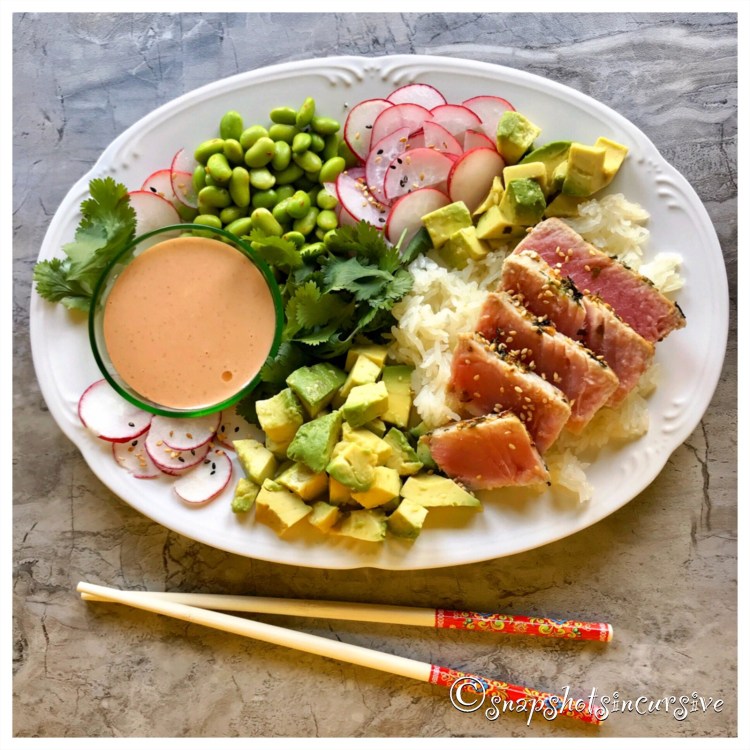
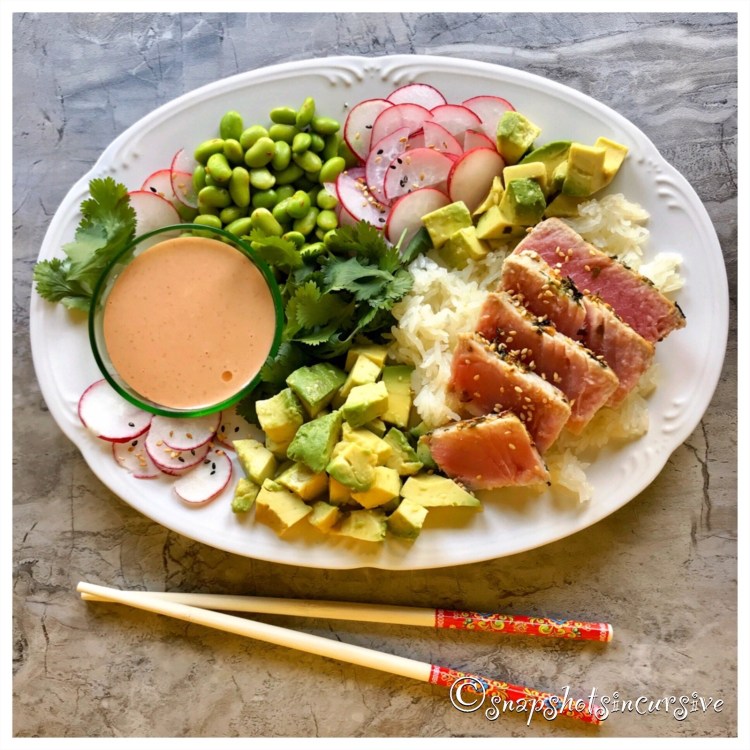
What’s Cooking in Gail’s Kitchen? Clean Eating: Ahi Poke Platter! Here’s a perfect example of choosing the foods you love. An ahi platter can offer many variations of side veggies to compliment the star attraction. Personally, I like the crunch of radish slices and mukimame. They balance quite nicely with the creaminess of a ripe avocado. Perhaps you may substitute these ingredients with cucumber slices and jicama sticks. I realize there are those who just don’t care for the taste of cilantro, no matter how often they try. That’s fine. Dill is a delightful change. I’m not here to be the food police. Are you getting the idea?

AHI POKE PLATTER

Ingredients:

1 tablespoon olive oil

1 tablespoon vegetable oil

1/2 teaspoon sesame oil

2 tablespoons furikake seasoning

1 teaspoon white sesame seeds, toasted

1 teaspoon black sesame seeds

2 ahi tuna steaks, skinless

1 cup sticky rice, prepared

1 avocado, pitted and cubed

1/2 cup mukimame

1/2 cup radishes, sliced thin

Fresh cilantro, chopped

1/2 cup mayonnaise

1 1/2 tablespoons sriracha

1/2 tablespoon soy sauce

Instructions:

Combine olive oil, vegetable oil, and sesame oil in a shallow dish. Add furikake seasoning, white sesame seeds, and black sesame seeds. Marinate ahi steaks ten minutes per side to coat evenly. Remove steaks from marinade and set aside. In a skillet over medium-high heat, warm the marinade mixture. Cook ahi steaks 2-3 minutes per side. The outer skin will appear seared while the center remains pink. Remove from heat. Transfer ahi steaks to a cutting board and tent with foil for 10 minutes. Cut into 1/4” thick slices. Arrange on a platter over sticky rice, overlapping the slices. Arrange avocado chunks, mukimame, radish slices, and chopped cilantro on the platter. For dipping sauce, combine mayonnaise, sriracha, and soy sauce. Mix well. Pour into a small bowl and serve with the ahi poke platter.

Mukimame Sea Salt Starter

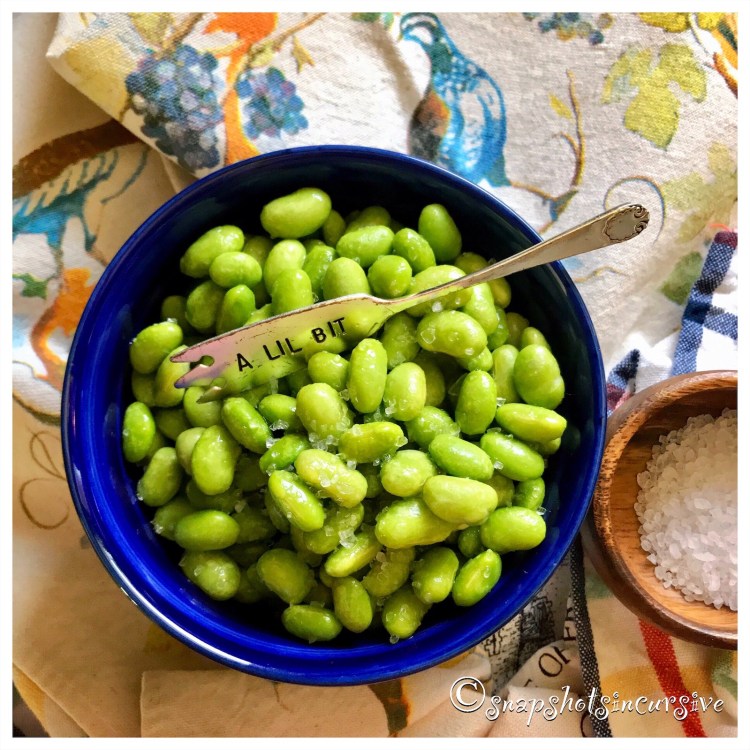
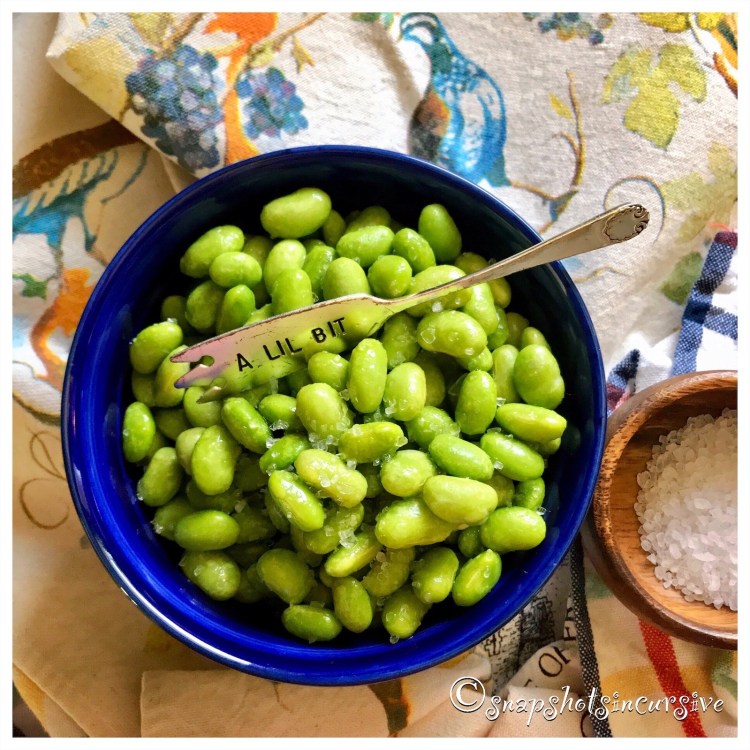
What’s Cooking in Gail’s Kitchen? Talking Points: Mukimame Sea Salt Starter! This is going to sound a little weird, but those who aren’t aware might be interested to know that mukimame and edamame are the same vegetable. They are both soy beans, a legume used to make tofu, soy milk, miso, and soy flour. Mukimame is the soybean after it is shelled; consequently, edamame is the soy bean in its fuzzy pod. Often a restaurant menu will offer a bowl of steamed edamame as an appetizer. You place the pod in your mouth, slide the beans out with your teeth, and then discard the pods. It’s meant to be a finger food snack you nibble over cocktails. Not everyone likes the texture or cares to graze in public. Now you have an alternative. Taste a lil bit of nutty flavor the easy way.

MUKIMAME SEA SALT STARTER

Ingredients:

10-ounce Mukimame, frozen

1 tablespoon sea salt course crystals

Instructions:

In a 2-quart double boiler, fill the saucepan with 2 1/2 cups water. Bring to a boil over medium heat. Fill the basket insert with mukimame beans. Place insert into the double boiler. Cover. Boil mukimame for 5 minutes. Drain well. Transfer mukimame to a serving bowl. Sprinkle with sea salt course crystals. Refrigerate until ready to serve.

Za’atar Avocado Salad

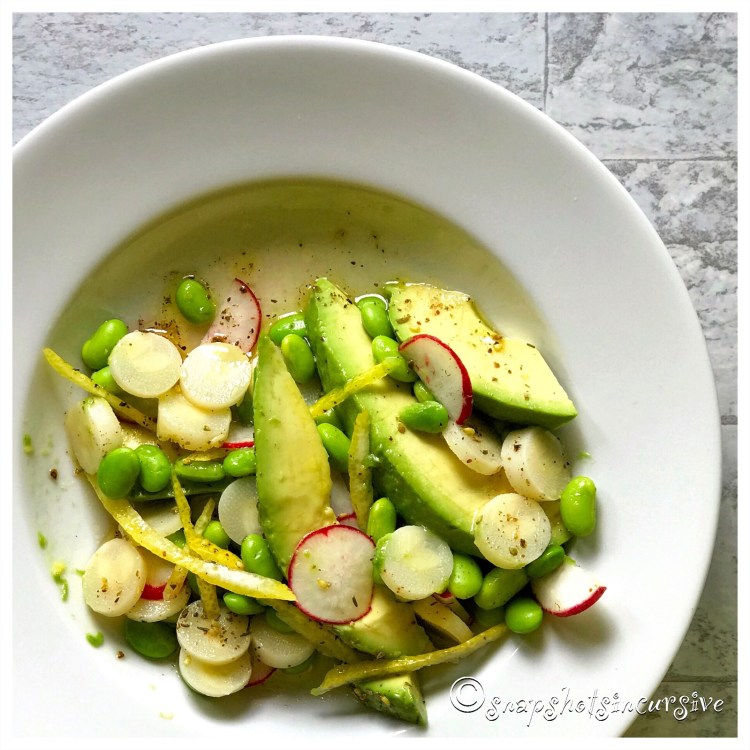
What’s Cooking in Gail’s Kitchen? Elevated Edibles: Za’atar Avocado Salad! Za’atar is one of those words that sounds mystical and magical to me, like “Abracadabra” or “Shazaam”. Sprinkling this Middle Eastern spice on fresh salads, meat dishes, or even homemade hummus guarantees to mysteriously transport you to faraway lands. Open the jar and sprinkle a little bit onto the palm of your hand. Dip your tongue into the blend of spices. Taste that earthiness? It’s cumin and toasted sesame. You already detect the savory flavors of oregano, marjoram, and thyme. But what is that unexpected tanginess? Can you guess? It’s sumac, the secret ingredient. Za’atar is a one-spice wonder you may want to sprinkle into olive oil to slather onto focaccia bread. Do it. Once you try it, watch it disappear. It’s that good.

ZA’ATAR AVOCADO SALAD

Ingredients:

1 avocado, pitted, peeled, and thinly sliced

1 tablespoon lime juice

3 hearts of palm, cut into thin rounds

1/2 cup frozen shelled edamame, thawed

2 radishes, sliced thin

1 tablespoon za’atar seasoning

2 tablespoons olive oil

1 tablespoon rice vinegar

1 teaspoon raw honey

1/4 teaspoon kosher salt

1/8 teaspoon cracked black pepper

Grated zest of lemon, for garnish

Instructions:

Arrange the avocado slices in a single layer on a platter. Drizzle lemon juice over slices. Scatter the hearts of palm over the avocados. Top with shelled edamame. Insert sliced radishes throughout. Sprinkle za’atar seasoning over all. In a small bowl, whisk together the olive oil, rice vinegar, and raw honey until blended. Season with kosher salt and cracked black pepper. Spoon the dressing over the salad. Garnish with lemon zest. Serve immediately.

East-West Shrimp Salad

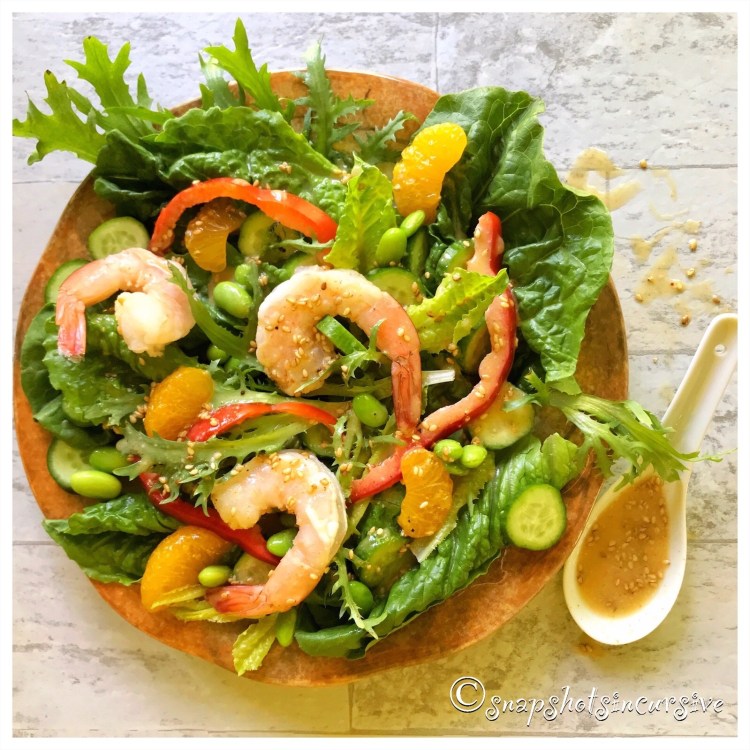
What’s Cooking in Gail’s Kitchen? Elevated Edibles: East-West Shrimp Salad! Shrimp, on its own, is a star attraction for a special meal. That pretty much goes without saying. I like the idea that shrimp makes a main course look complex, or restaurant-worthy. By adding steamed mukimame, mandarin oranges, sesame seeds, and soy sauce, suddenly an everyday garden salad sings a different tune. The fusion of flavors becomes enlightening, like the eternal knowledge of an Eastern sunrise. Is it any wonder I heart shrimp?

EAST-WEST SHRIMP SALAD

Ingredients:

1 pound shrimp, shelled, deveined, and cooked

1/2 cup mukimame, steamed

1/2 cup mandarin orange segments

1/2 cup baby cucumber, skin on and sliced

1/4 red pepper, cut into strips

Lettuce greens

Ingredients for Dressing:

2 tablespoons olive oil

2 tablespoons garlic wine vinegar

2 tablespoons agave nectar

1 tablespoon mayonnaise

1/2 teaspoon Italian seasoning mix

2 teaspoons soy sauce

1/2 teaspoon ground ginger

1 tablespoon toasted sesame seeds

Instructions:

Prepare the shrimp according to package directions. Set aside. Arrange lettuce greens on a salad plate. Add steamed mukimame, mandarin orange segments, sliced cucumbers, and red pepper strips. In a bowl, combine olive oil, garlic wine vinegar, agave nectar, mayonnaise, Italian seasoning mix, soy sauce, ground ginger, and toasted sesame seeds. Mix well. Pour dressing over salads and toss to coat. Arrange shrimp on top to spotlight. Serve immediately.
Ahi Poke Platter

What’s Cooking in Gail’s Kitchen? Clean Eating: Ahi Poke Platter! Here’s a perfect example of choosing the foods you love. An ahi platter can offer many variations of side veggies to compliment the star attraction. Personally, I like the crunch of radish slices and mukimame. They balance quite nicely with the creaminess of a ripe avocado. Perhaps you may substitute these ingredients with cucumber slices and jicama sticks. I realize there are those who just don’t care for the taste of cilantro, no matter how often they try. That’s fine. Dill is a delightful change. I’m not here to be the food police. Are you getting the idea?

AHI POKE PLATTER

Ingredients:

1 tablespoon olive oil

1 tablespoon vegetable oil

1/2 teaspoon sesame oil

2 tablespoons furikake seasoning

1 teaspoon white sesame seeds, toasted

1 teaspoon black sesame seeds

2 ahi tuna steaks, skinless

1 cup sticky rice, prepared

1 avocado, pitted and cubed

1/2 cup mukimame

1/2 cup radishes, sliced thin

Fresh cilantro, chopped

1/2 cup mayonnaise

1 1/2 tablespoons sriracha

1/2 tablespoon soy sauce

Instructions:

Combine olive oil, vegetable oil, and sesame oil in a shallow dish. Add furikake seasoning, white sesame seeds, and black sesame seeds. Marinate ahi steaks ten minutes per side to coat evenly. Remove steaks from marinade and set aside. In a skillet over medium-high heat, warm the marinade mixture. Cook ahi steaks 2-3 minutes per side. The outer skin will appear seared while the center remains pink. Remove from heat. Transfer ahi steaks to a cutting board and tent with foil for 10 minutes. Cut into 1/4” thick slices. Arrange on a platter over sticky rice, overlapping the slices. Arrange avocado chunks, mukimame, radish slices, and chopped cilantro on the platter. For dipping sauce, combine mayonnaise, sriracha, and soy sauce. Mix well. Pour into a small bowl and serve with the ahi poke platter.

Mukimame Sea Salt Starter

What’s Cooking in Gail’s Kitchen? Talking Points: Mukimame Sea Salt Starter! This is going to sound a little weird, but those who aren’t aware might be interested to know that mukimame and edamame are the same vegetable. They are both soy beans, a legume used to make tofu, soy milk, miso, and soy flour. Mukimame is the soybean after it is shelled; consequently, edamame is the soy bean in its fuzzy pod. Often a restaurant menu will offer a bowl of steamed edamame as an appetizer. You place the pod in your mouth, slide the beans out with your teeth, and then discard the pods. It’s meant to be a finger food snack you nibble over cocktails. Not everyone likes the texture or cares to graze in public. Now you have an alternative. Taste a lil bit of nutty flavor the easy way.

MUKIMAME SEA SALT STARTER

Ingredients:

10-ounce Mukimame, frozen

1 tablespoon sea salt course crystals

Instructions:

In a 2-quart double boiler, fill the saucepan with 2 1/2 cups water. Bring to a boil over medium heat. Fill the basket insert with mukimame beans. Place insert into the double boiler. Cover. Boil mukimame for 5 minutes. Drain well. Transfer mukimame to a serving bowl. Sprinkle with sea salt course crystals. Refrigerate until ready to serve.