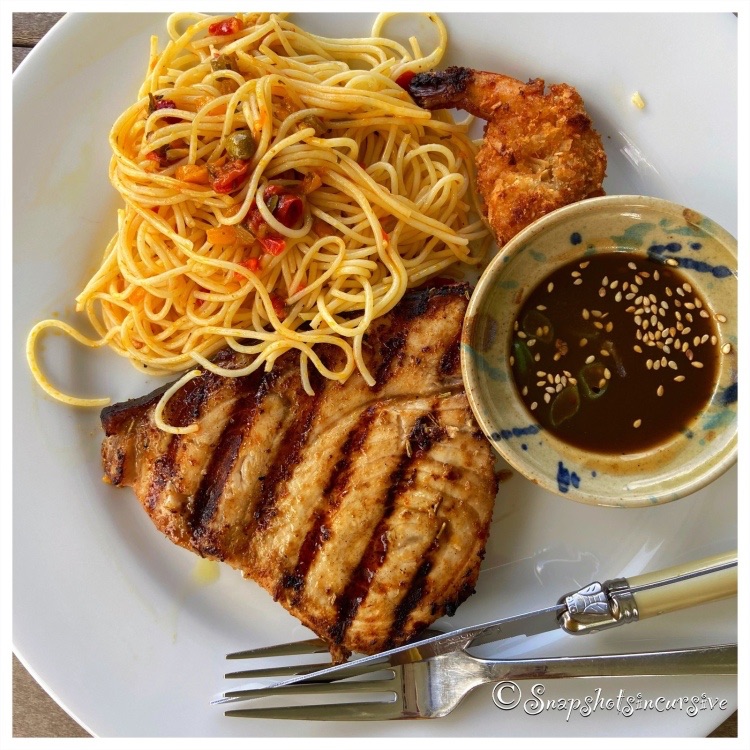
Swordfish on the Grill

What’s Cooking in Gail’s Kitchen? Palatable Possibilities: Swordfish on the Grill! Swordfish is called “Steak” for a reason. Forget fishy-tasting fish. (Say that 3 times really fast!) Swordfish, when grilled, looks more like a ribeye steak. It’s a dense, thick piece of fish. Now that doesn’t mean it is dry and tough. Actually the opposite is true. When you plan ahead and use a marinade, it becomes meaty and juicy, thereby satisfying both meat lovers and fish lovers. You can tell it is cooked because it actually changes color. One more thing, when setting the table…don’t forget the steak knife.

SWORDFISH ON THE GRILL

Ingredients:

4 6-ounce swordfish steaks

3 tablespoons olive oil

2 teaspoons soy sauce

1 tablespoon garlic red-wine vinegar

1 teaspoon dried rosemary

1 tablespoon minced garlic

2 teaspoons ground coriander

1 teaspoon ground cumin

2 teaspoons grated lemon rind

1/4 teaspoon red pepper flakes

Instructions:

Rinse swordfish; pat dry. Set aside. To make the marinade, combine olive oil, soy sauce, garlic red-wine vinegar, dried rosemary, minced garlic, ground coriander, ground cumin, grated lemon rind, and red pepper flakes. Whisk to blend. Place swordfish steaks in a single layer of a shallow dish. Pour marinade over all. Coat both sides of fish. Cover dish with plastic wrap and refrigerate for two hours. Remove dish from refrigerator and allow to come to room temperature while preheating the gas grill to 400°. Place swordfish steaks on the preheated grill. Close lid and cook for 5 minutes. Turn, close lid, and cook 5 minutes longer. Fish will be charred on the edges. Serve immediately.
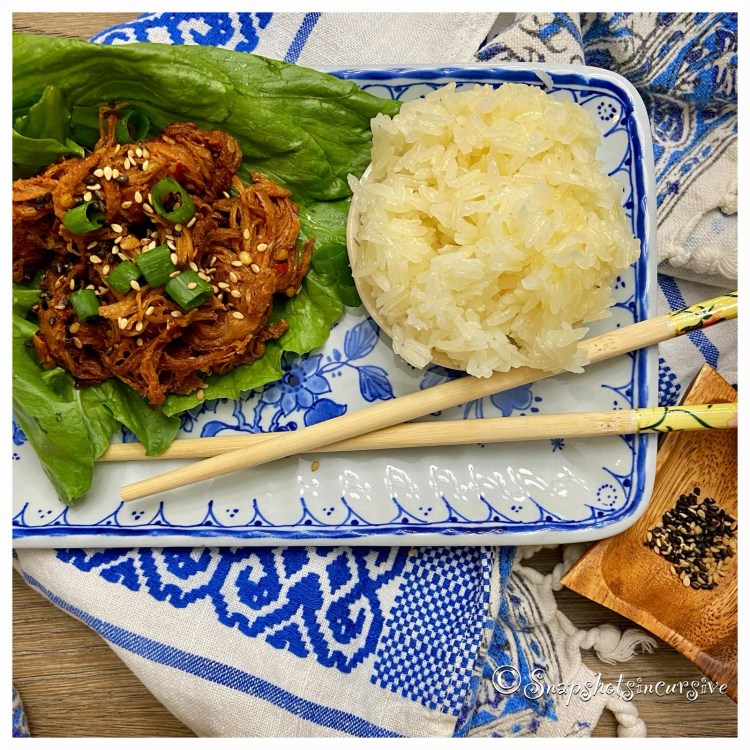
Gochujang Glazed Pork

What’s Cooking in Gail’s Kitchen? Time To Eat: Gochujang Glazed Pork! I like it when fellow bloggers share success stories about recipes they’ve used. It’s the best kind of testimonial for good eating, in my opinion. Judy, of Cooking With Aunt Juju*, also knows the value of letting the slow cooker do most of the work. Plus, it makes the house smell ah-mazing! The only difference I made was substituting pork loin for the beef stew meat. But you know what they say, “Two heads are better than one.” Thanks Judy for another great home-cooked meal.

GOCHUJANG GLAZED PORK

Ingredients:

2 pounds pork loin, cubed

4 scallions, sliced and separated

4 garlic cloves, minced

1/2 cup cola

3 tablespoons gochujang

3 tablespoons soy sauce

2 tablespoons brown sugar

1 tablespoon toasted sesame oil

2 teaspoons rice vinegar

Green onions, for garnish

Instructions:

Combine cubed pork loin, scallions, and minced garlic in an 8-quart crockpot. Combine cola, gochujang, soy sauce, brown sugar, and sesame oil. Whisk well. Pour over meat; coat well. Cover the crockpot and cook on low heat for 8 hours. Stir well; remove pork loin cubes to a platter. Gently shred the chunks. Pour the remaining sauce into a skillet and simmer over medium heat. Cook, stirring occasionally, for 10 minutes, or until thickened. Add the rice vinegar and platter of shredded pork. Simmer for 5 minutes, stirring occasionally, until the meat is coated and sauce turns thick and glossy. Transfer to plates; garnish with green onion snips and toasted sesame seeds, as desired. Serve with steamed rice.

* Check out the original recipe at http://cookingwithauntjuju.com/2023/04/20

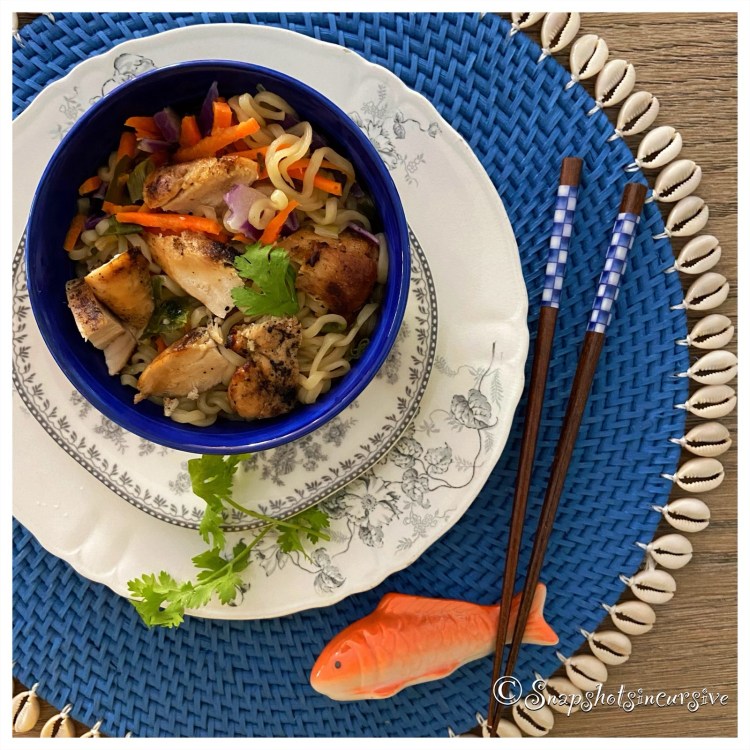
Yaki Chicken Udon

What’s Cooking in Gail’s Kitchen? Stir. Spread. Flip. Repeat: Yaki Chicken Udon! Who likes Japanese noodles, sautéed veggies, and a rich savory sauce? Me, too. If I can sneak a couple mushrooms into a dish, it’s always a good day for me. The hubs isn’t as crazy about fungus as I am, which is why I put in his favorite (carrots) to tastefully distract him. No judgment, please.

YAKI CHICKEN UDON

Ingredients:

1 tablespoon oyster sauce

1 tablespoon soy sauce

1 tablespoon mirin

7.76-ounce package udon Japanese-style noodles

1 clove garlic

1/4 cup onion, chopped

2-3 whole mushrooms, sliced

4-ounce chicken breast, boneless and skinless, cut into bite-sized pieces

2 baby carrots, julienned

1/4 cup red cabbage, shredded

Cilantro, for garnish

Instructions:

In a small bowl, combine oyster sauce, soy sauce, and mirin. Mix well; set aside. To prepare the udon noodles, bring water to a boil over medium-high heat. Add the dried udon noodles. Cook 8-10 minutes, stirring occasionally to prevent sticking. Drain; set aside. Spray a skillet with nonstick oil. Warm pan over medium heat. Sauté garlic clove and chopped onions. Stir thoroughly, about 2-3 minutes, to prevent scorching. The onions will begin to soften as the garlic turns golden. Add chicken chunks and sliced mushrooms. Cook 3-4 minutes, turning chicken on each side, or until the chicken pieces are seared and cooked thoroughly. Once the chicken is ready, add the udon noodles, soy sauce mixture, julienned carrots, and shredded cabbage. Toss everything together until well coated. Garnish with fresh cilantro.

Ginger Glazed Baked Tilapia

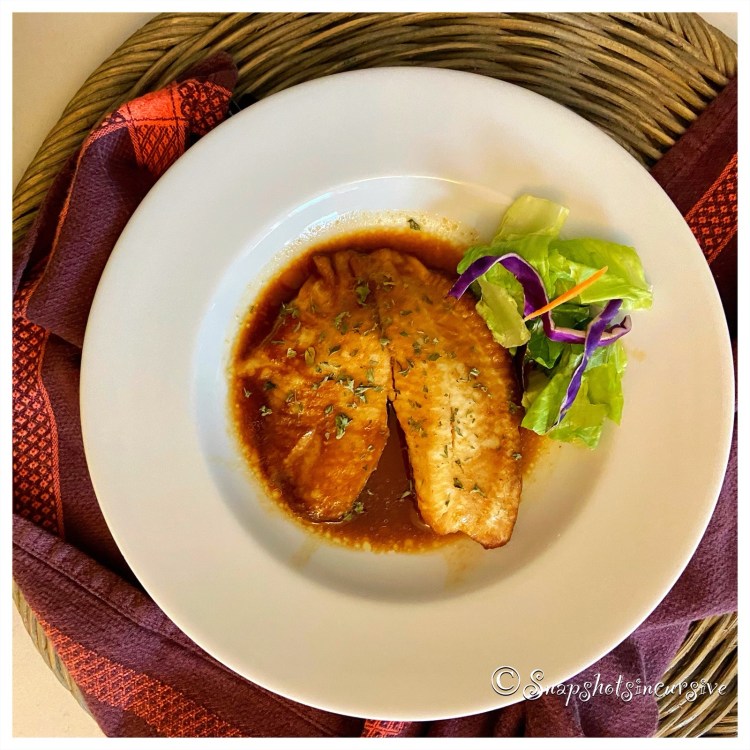
What’s Cooking in Gail’s Kitchen? Stir. Spread. Flip. Repeat: Ginger Glazed Baked Tilapia! Do you bypass those brownish stems in the produce department that resemble tree roots? Think twice about ignoring them. Ginger is a plant-based spice that produces an energized aroma. It adds a wonderful zing to bakery items, carbonated beverages, and today’s feature, tilapia fish. Embrace the flavor without regrets.

GINGER GLAZED BAKED TILAPIA

Ingredients:

2 tilapia fish filets

1/3 cup orange juice

3 tablespoons soy sauce

2 tablespoons olive oil

1 teaspoon ground ginger

1 teaspoon brown sugar

Instructions:

Season tilapia filets with sea salt and black pepper. Place in a shallow baking dish. In a small bowl, whisk together orange juice, soy sauce, olive oil, ginger, and brown sugar. Pour over tilapia. Cover; marinate in refrigerator for 20 minutes. Preheat oven to 400°. Place baking dish in oven. Bake fish for 13-15 minutes, or until fish flakes easily with a fork.

Aubergine Ginger Slices

What’s Cooking in Gail’s Kitchen? Stir. Spread. Flip. Repeat: Aubergine Ginger Slices! When you’re looking for a meatless meal, think eggplant, or aubergine. The flesh, when cooked, magically transforms into a buttery soft, custard-like consistency that practically melts in your mouth. How to choose a ripe aubergine? Simply press your finger on the skin. Once released, the indentation will bounce back.

AUBERGINE GINGER SLICES

Ingredients:

1 aubergine, skin on; sliced into 1/2” discs

1/4-1/3 cup cornmeal

3 garlic cloves, minced

1 inch fresh ginger, minced

2 green onions, finely sliced

1 tablespoon sugar

4 tablespoons soy sauce

Cilantro, for garnish

Instructions:

Coat each aubergine disc in cornmeal; set aside. Warm vegetable oil on medium heat in an iron skillet. Fry each coated aubergine in the iron skillet for 5 minutes, without crowding. Flip and repeat discs for a golden brown color. Remove and set aside. Rinse the iron skillet and return to the heat. Add a drizzle of vegetable oil. Add minced garlic, minced ginger, finely sliced green onions, sugar, and soy sauce. Stir occasionally. Simmer for 5 minutes, or until sauce thickens. Transfer the fried aubergines to the sauce; simmer 5 minutes longer, flipping halfway through to absorb the sauce. Remove the aubergines. Serve with steamed rice. Drizzle remaining sauce over all.

Sesame Crusted Ahi

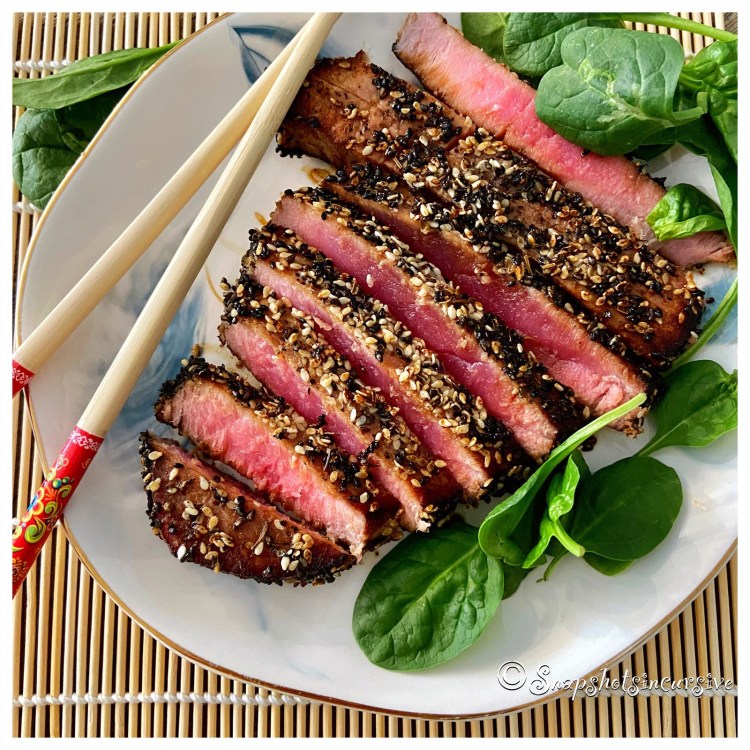
What’s Cooking in Gail’s Kitchen? Uplifting Aromas: Sesame Crusted Ahi! Even if you prefer a t-bone steak well done, remember that ahi tuna is different from beef. For one reason, ahi tuna can get as tough as shoe leather and as dry as dust when it is overcooked. Pink does not mean raw. Fresh tuna is dark red in color. That’s raw. For those who are trying to maintain a low-fat diet, reduce cholesterol, and strive for good heart health, ahi tuna is nice and lean. The taste is delicious and seems to be rising in popularity.

SESAME CRUSTED AHI

Ingredients:

3 tablespoons toasted sesame seeds, black and white

1 teaspoon fried garlic

1 teaspoon kosher salt

1 teaspoon black pepper

1 teaspoon sugar

1 teaspoon dried Italian seasoning blend

12-ounce ahi tuna steak, sushi grade

1 tablespoon soy sauce

2 tablespoons vegetable oil

Instructions:

In a small shallow dish, combine toasted sesame seeds, fried garlic, kosher salt, black pepper, sugar, and dried Italian seasoning blend. Mix well. Pat dry the ahi steak. Coat both sides and the ends with soy sauce. Generously cover both sides of the ahi steak with the sesame seed coating. Press down onto the flesh to adhere spices to the fish. First of all, in order to get a nice golden sear, heat a cast iron skillet over medium high heat until the pan is very, very hot. Add the oil to coat the pan. Carefully place the ahi tuna into the skillet, pressing it into the pan with a metal spatula. Sear for 60 seconds, or until golden brown. Carefully flip. Sear for another 60-90 seconds until golden. Use a tongs to hold it upright to sear the sides, if preferred. Place the seared ahi steak onto a cutting board. Using a very sharp knife, slice thinly and serve. The middle should have a very nice pink color. Enjoy!

Korean Pork Tacos

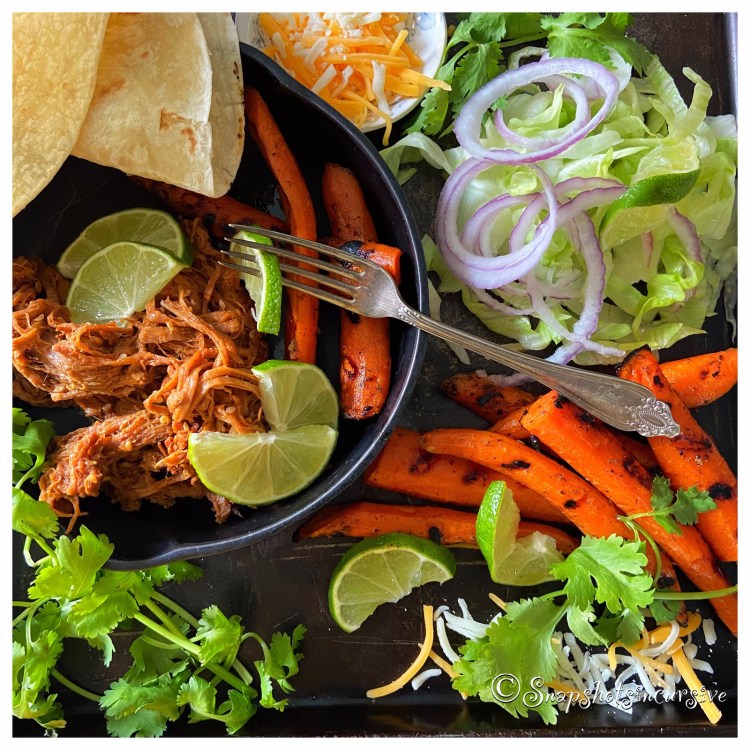
What’s Cooking in Gail’s Kitchen? Uplifting Aromas: Korean Pork Tacos! Chile paste is a unique condiment that gives food a fiery kick of flavor whether you’re spicing up soups and dips, or veggies and meat. Keep in mind, Gochujang has a pungent flavor a notch hotter than sriracha, without the sweetness. Personally, I like the feel of the lingering heat on the roof of my mouth. Slow cooking makes it taste marvelous when mixed with the other ingredients. Gochujang is usually found near the barbecue sauces in the grocery aisle. In case you need to find a substitute, Sriracha gets my vote. Friendly Footnote: remember to use sriracha IN the sauce rather than splashing it on top afterwards.

KOREAN PORK TACOS

Ingredients:

1/4 cup rice wine vinegar

2 tablespoons soy sauce

1/2 cup gochujang

3 tablespoons garlic, minced

3 tablespoons fresh ginger root, minced

2 tablespoons red pepper flakes

1/2 teaspoon black pepper

3 tablespoons sugar

3 green onions, chopped

1/2 yellow onion, chopped

2 pounds pork loin

Instructions:

In a large bowl, combine rice wine vinegar, soy sauce, gochujang, minced garlic, minced ginger, red pepper flakes, black pepper, sugar, green onions, and yellow onions. In a slow cooker, place pork loin. Pour prepared sauce over meat. Cover. Heat on High setting for 4 hours; reduce to Low setting and cook 4 hours longer. Using two forks, shred the pork loin to mix well with the sauce. (Don’t let that yummy sauce go to waste.) Keep warm until ready to serve. Use your favorite taco shells, cheese, and fillings to make a meal.

Xia Chinese Shrimp

What’s Cooking in Gail’s Kitchen? Elevated Edibles: Xia Chinese Shrimp! Stir-fry is a popular way to cook a meal. Many chefs use a wok while others simply use a shallow skillet. Both work just fine, so follow your heart. By tossing and stirring chunks of food over high heat, meals are ready in minimal time. Who-hoo! It’s important to use a cooking oil that can handle high heat without smoking, so leave the olive oil on the shelf. Canola and vegetable oil are workhorses that not only have a high smoking point, but also have a neutral taste, which is why it was chosen here. Be sure to prepare ingredients in advance, including side dishes. Once the stir-fry is ready, it’s time to eat.

XIA CHINESE SHRIMP

Ingredients:

1/4 cup ketchup

2 tablespoons rice wine vinegar

1 tablespoon soy sauce

1 tablespoon mirin

1 tablespoon agave nectar

2 tablespoons vegetable oil

1 tablespoon ginger, minced

3 scallions, roughly chopped

1 pound jumbo shrimp, shelled and deveined

Green onions, for garnish

Instructions:

Whisk together ketchup, rice wine vinegar, soy sauce, mirin, and agave nectar in a small bowl. Set aside. Warm vegetable oil in a shallow skillet over medium-high heat. Add minced ginger and chopped scallions. Cook until fragrant, stirring constantly for one minute. Add shrimp. Cook about 2 minutes, turning over and over. Shrimp will change to pink in color. Add prepared sauce. Cook for one minute until thick, stirring often. Remove from heat. Divide between dinner plates. Garnish with green onion snips. Serve immediately over cooked rice, if desired.

East-West Shrimp Salad

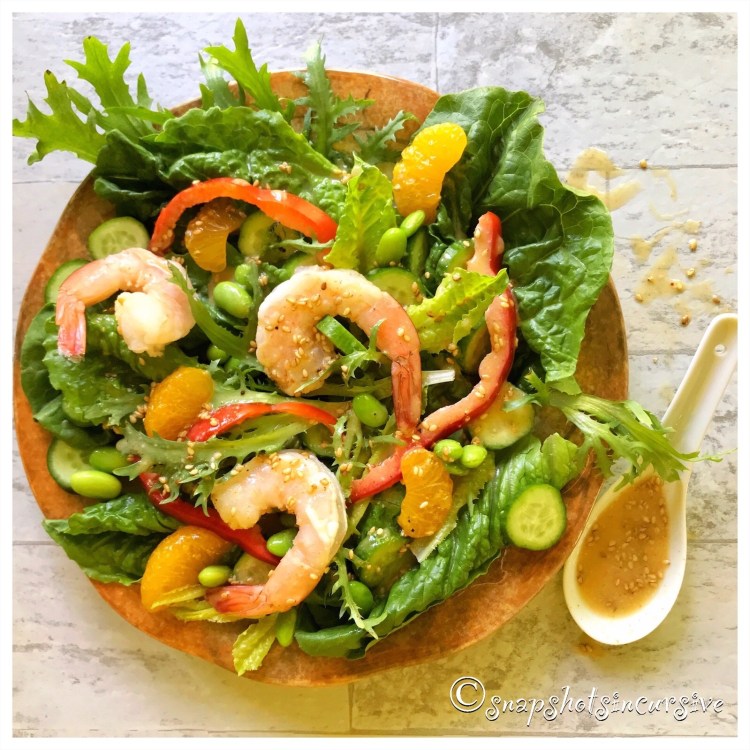
What’s Cooking in Gail’s Kitchen? Elevated Edibles: East-West Shrimp Salad! Shrimp, on its own, is a star attraction for a special meal. That pretty much goes without saying. I like the idea that shrimp makes a main course look complex, or restaurant-worthy. By adding steamed mukimame, mandarin oranges, sesame seeds, and soy sauce, suddenly an everyday garden salad sings a different tune. The fusion of flavors becomes enlightening, like the eternal knowledge of an Eastern sunrise. Is it any wonder I heart shrimp?

EAST-WEST SHRIMP SALAD

Ingredients:

1 pound shrimp, shelled, deveined, and cooked

1/2 cup mukimame, steamed

1/2 cup mandarin orange segments

1/2 cup baby cucumber, skin on and sliced

1/4 red pepper, cut into strips

Lettuce greens

Ingredients for Dressing:

2 tablespoons olive oil

2 tablespoons garlic wine vinegar

2 tablespoons agave nectar

1 tablespoon mayonnaise

1/2 teaspoon Italian seasoning mix

2 teaspoons soy sauce

1/2 teaspoon ground ginger

1 tablespoon toasted sesame seeds

Instructions:

Prepare the shrimp according to package directions. Set aside. Arrange lettuce greens on a salad plate. Add steamed mukimame, mandarin orange segments, sliced cucumbers, and red pepper strips. In a bowl, combine olive oil, garlic wine vinegar, agave nectar, mayonnaise, Italian seasoning mix, soy sauce, ground ginger, and toasted sesame seeds. Mix well. Pour dressing over salads and toss to coat. Arrange shrimp on top to spotlight. Serve immediately.