Taro Tuna Crudo

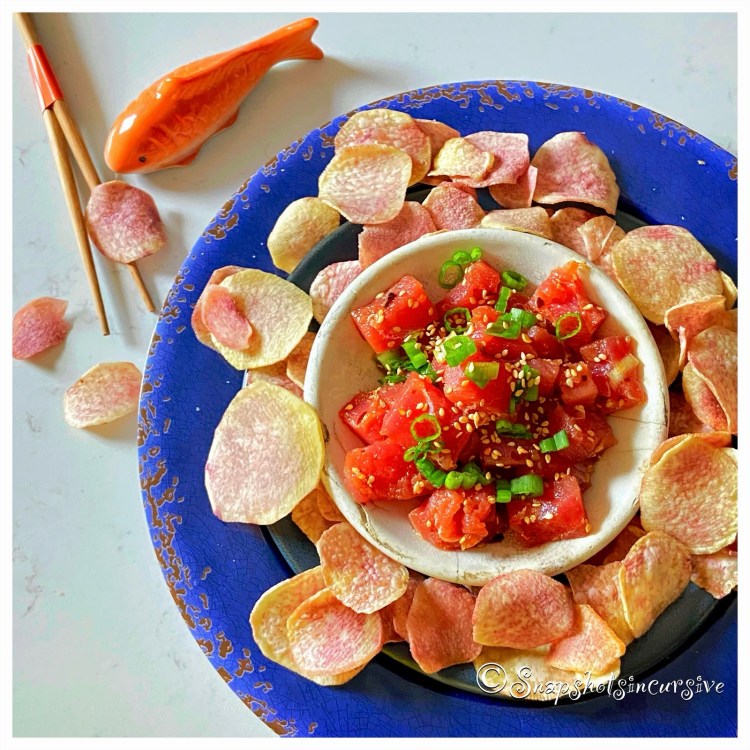
What’s Cooking in Gail’s Kitchen? Food Plating: Taro Tuna Crudo! Pay attention to the kind of tuna you need for this recipe. It needs to be a high-quality (sashimi) raw fish. Also you should use a good quality olive oil. Remember what I said the other day about quality ingredients? There’s nothing worse than catching a stale fish odor right before that first bite. It can put a damper on the whole “raw fish” experience. I think you know what I’m talking about. Crudo is an Italian dish containing raw fish. The difference comes when it is paired with a simple dressing of olive oil and citrus juice. It requires no marination whatsoever. Just mix and serve. Perfetto! 

TARO TUNA CRUDO

Ingredients: 

2 tablespoons lemon juice

2 tablespoons olive oil

1 teaspoon sea salt

1/2 teaspoon white pepper

8-ounces ahi tuna steaks, sashimi-grade

1-2 green onions, thinly sliced

1 teaspoon toasted sesame seeds

Instructions:

In a bowl, whisk together lemon juice, olive oil, sea salt, and white pepper. Set aside. Cut the raw ahi tuna into bite-size cubes. Add to the dressing; gently toss. Top with sliced green onions and toasted sesame seeds. Serve with taro chips. 
Zestful Ahi Poke

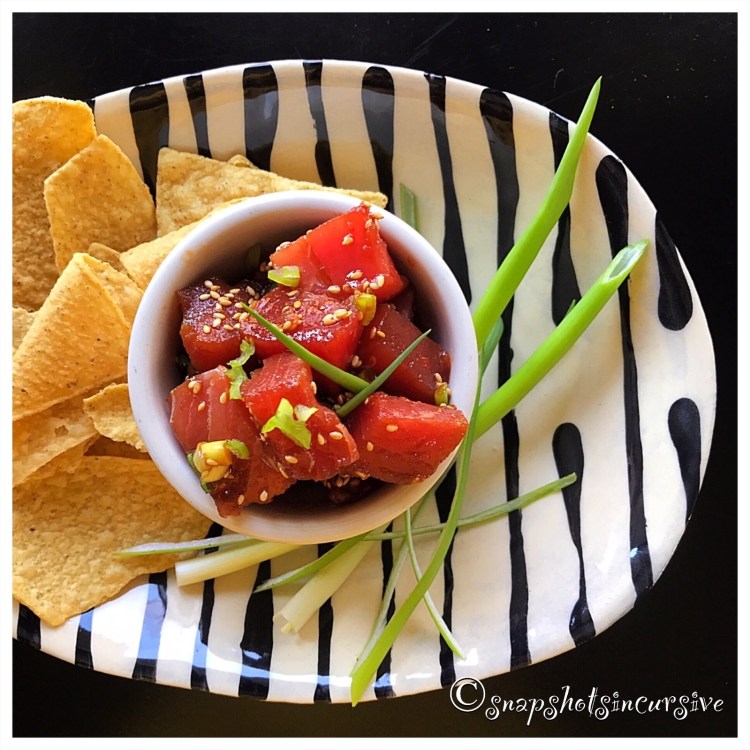
What’s Cooking in Gail’s Kitchen? The Next Step: Zestful Ahi Poke! Have you noticed all the rage about eating raw tuna? Whether it’s an appetizer or poke bowl, ahi seems to be the star attraction. If you’ve never tried it, perhaps it takes some getting used to. After all, the texture is totally different from cooked fish. When saturated in a spicy sesame soy marinade, I found it absolutely irresistible. Then served with crunchy wonton crisps, taro chips (my fav), or corn tortilla chips it evolves from a curiosity to a craving. Just so you know, premium ahi tuna steaks are now available in the freezer aisle for those, like me, who are landlocked part of the year.

ZESTFUL AHI POKE

Ingredients:

2 ahi tuna steaks, premium grade

3 tablespoons soy sauce

1 teaspoon sesame oil

1 teaspoon chili garlic sauce

1 tablespoon toasted sesame seeds

1/2 cup green onion, chopped

Wonton Crisps, Taro Chips, or Corn Tortilla Chips

Instructions:

Pat ahi tuna steaks dry with a paper towel. Cut into 1/2” cubes. Transfer to a bowl. Add soy sauce, sesame oil, chili garlic sauce, toasted sesame seeds, and chopped green onions. Gently toss to coat. Cover and refrigerate one hour. Serve as an appetizer with choice of chips.

Fields of Taro

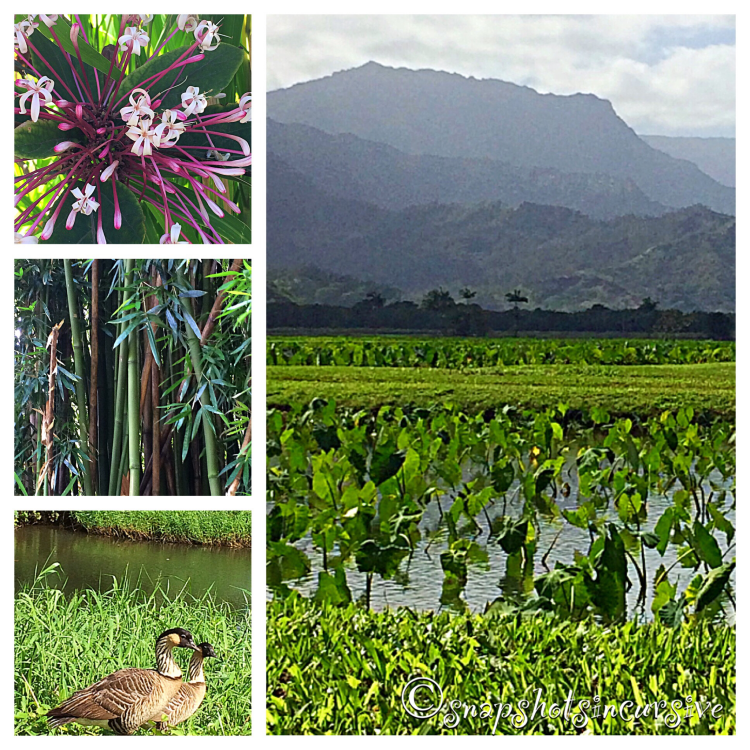
The road to Hanalei overlooks a landscape many artists dream of capturing on canvas. In fact, it’s not unusual to see someone standing off the side of the road with feet firmly planted in front of a wooden easel with paintbrush in hand. Farther up the steep winding paved surface is a bird’s eye view of the valley below where taro fields thrive. This is the eclectic village of Hanalei. Cross the single lane bridge at the bottom of the hill and see. At first glance these plants, with leaves the size of elephant ears, appear to be growing out of soggy fields saturated with water. Second cousins to the mallard duck waddle and fly wherever they please. This wildlife habitat is their lush playground. In the distance you may spot a farmer systematically tending the crop, knee-deep in the muddy paddy fields, oblivious to the stunning backdrop. After all, taro root is Hawaii’s favorite starch. Beyond his shoulder sweeps an endless view of towering mountains ruggedly splashed with colors of smoky amethyst and emerald jade. Pause here and drink in the beauty for reflection later on. 

No Pig-Latin Required 

A Kalua pig roast is as common in the Hawaiian Islands as an American hot dog is at a baseball game. A big difference on the islands is the time-consuming preparation required using an underground oven, or imu, for the pig roast. Patience is key. Slow cooking is the secret to rich, moist, tender pork with just the right amount of smoky taste that cannot be duplicated. To be fortunate enough to watch the ceremonial process is a privilege few tourists afford. After two hours the lava rocks are hot enough for the entire pig, which is wrapped in chicken wire, to be placed in the imu by two sturdy men. Taro, sweet potatoes, and ulu breadfruit are tucked around the pig before banana leaves and wet burlap completely encase it. A canvas tarp becomes the next covering. Last, but not least, dirt is used like the lid on a pot. Set the timer. The pig will roast underground for eight hours, saturating all the flavors. Once the multiple layers are removed, the tender pork is shredded and the luau begins. Aloha!